
Barcelona isn’t just another race on the calendar — it’s the development litmus test of the season. With its mix of long straights, technical corners, and fast sweeping sections, the Circuit de Barcelona-Catalunya gives teams a clear sense of what’s working… and what isn’t. That’s why it’s the hotspot for mid-season upgrades — and 2025 is no exception.
As the paddock returns to Europe, all eyes are on who brings what — and whether those tweaks will close gaps, spark comebacks, or quietly confirm a team’s trajectory for the rest of the year. But beyond the aero packages and chassis tweaks, this moment is just as much about pressure: from inside the garage, between teammates, and from fans watching hopes rise (or deflate) with every sector split.
What to expect from the teams?
Barcelona is where teams start showing their cards. Whether it’s a new floor, sidepod concept, rear wing tweak, or just software optimizations, upgrades this weekend aren’t just about raw pace — they’re about intent. Red Bull might look to reclaim dominance after a turbulent few races. Ferrari could bring refinements after recent mixed results. And Mercedes? This may be their last chance to pivot the W15 in the right direction before writing off 2025 developmentally. Eyes are also on Aston Martin and Alpine to see if their earlier upgrades were a one-off or part of a genuine upward trend.
FIA Technical Directive TD/018-25: New Front Wing Regulations for 2025 Spanish GP
With TD/018-25 officially in effect from today’s Free Practice session, the FIA has once again tightened the leash on aerodynamic innovation — this time targeting flexible front wings. The new directive reduces allowable deflection under load, forcing teams to adopt more rigid designs to comply.
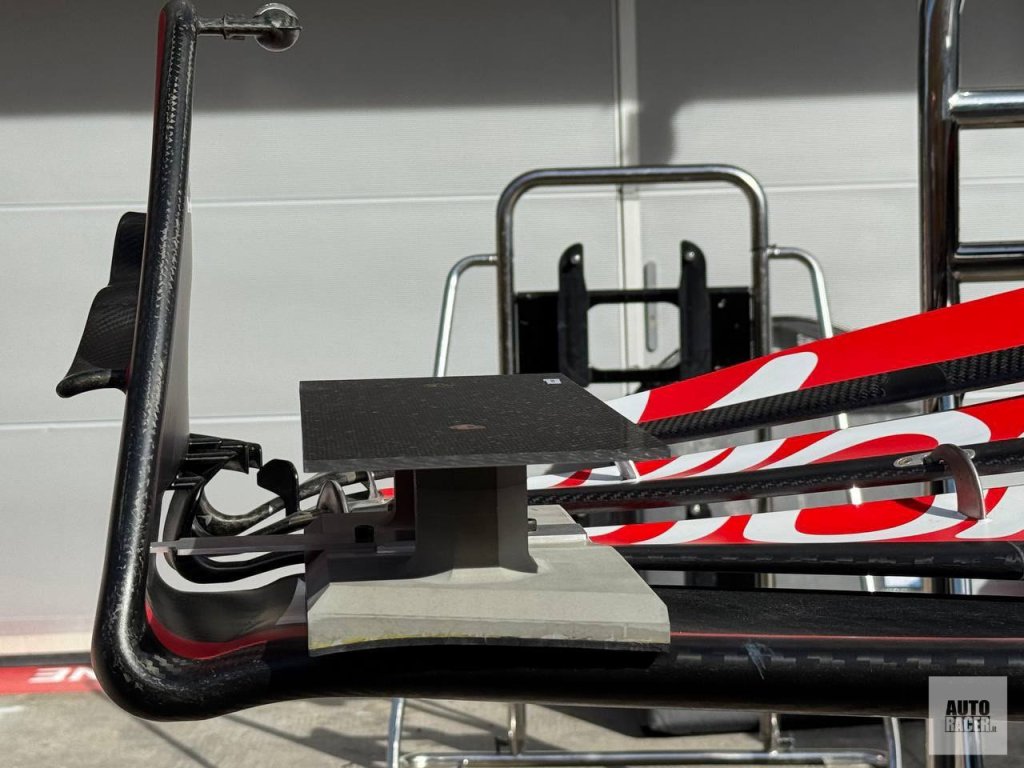
FIA’ s New Front Wing Testing
A gist of what the new Technical Directive is all about for those of you who are new to it:
Ahead of the 2025 Spanish Grand Prix, the FIA has introduced Technical Directive TD/018-25 to clamp down on flexible front wings that have been giving some teams an aerodynamic advantage. The key change is the reduction in allowable vertical deflection of the front wing under load, cutting the limit from 15mm to 10mm when a 100kg load is applied. The side deflection limit is also reduced from 20mm to 15mm, and the front wing flap deflection limit drops from 5mm to 3mm.
Interestingly, Ferrari seems largely unaffected by the change. The Scuderia had already been running a stiffer front wing, focusing instead on redesigning their rear wing for Barcelona.
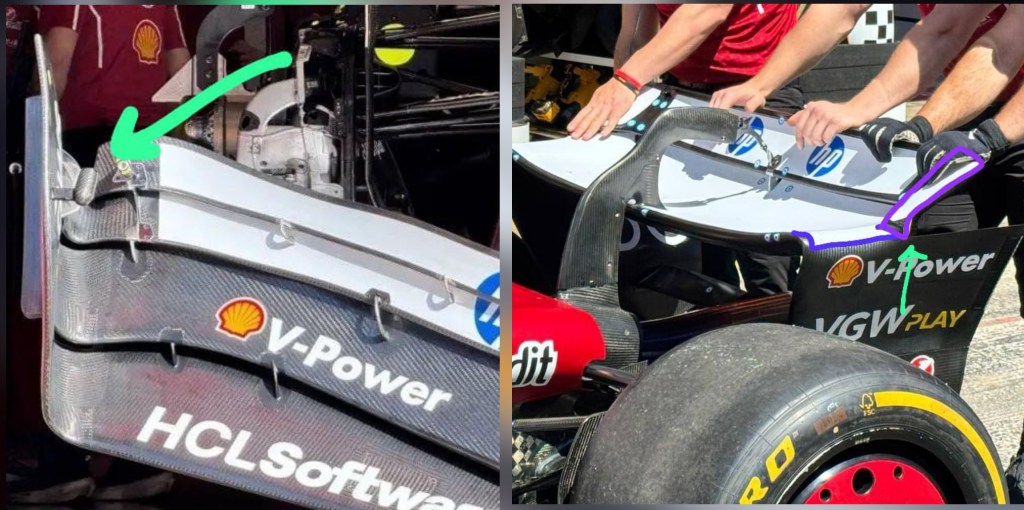
Meanwhile, McLaren — despite suspicions — reportedly never leaned heavily on front wing flex, and may escape the worst of the directive’s impact.
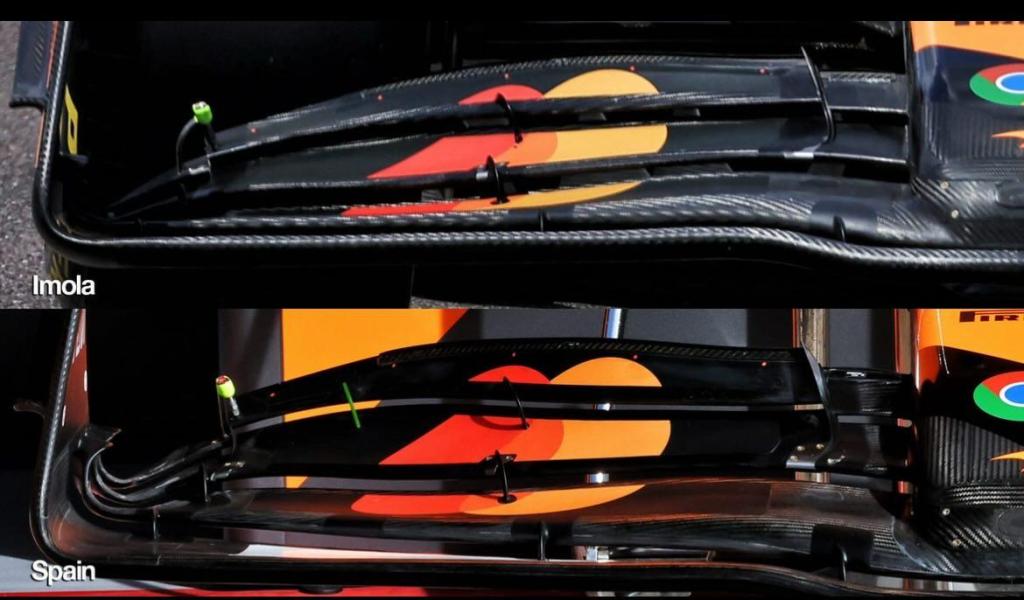
Mercedes, on the other hand, had made use of flexi-wing concepts until Imola, after which they shifted to a stiffer setup, possibly in anticipation of FIA scrutiny.Other teams were seen testing rigid front wings in FP1, though detailed info remains scarce. What’s clear is that TD/018-25 has reset the aerodynamic playing field, seemingly aligning teams more closely with Ferrari’s setup philosophy.

“The team had clearly hoped that the revisions would improve its mechanical and aero platform and deliver gains in terms of tyre management, but things didn’t work out quite like that”
The FIA’s mid-season adjustments are indirectly favouring teams like Ferrari who have already adapted— and forcing other’s to recalibrate
But this isn’t the first time innovation has met regulation.
Motorsport fans might recall the early DRS-era “F-duct” — a clever system where drivers used their hand or leg to block a hole, rerouting airflow to stall the rear wing and reduce drag. It was a masterstroke of ingenuity… until it wasn’t. The FIA swiftly banned it, citing safety and regulatory clarity.This recurring pattern — innovation leading to advantage, followed by FIA intervention — is sparking debate.
Is the governing body preserving fairness or policing creativity out of the sport?
 Sports Togetherness
Leave a comment